
Last updated November 15, 2026
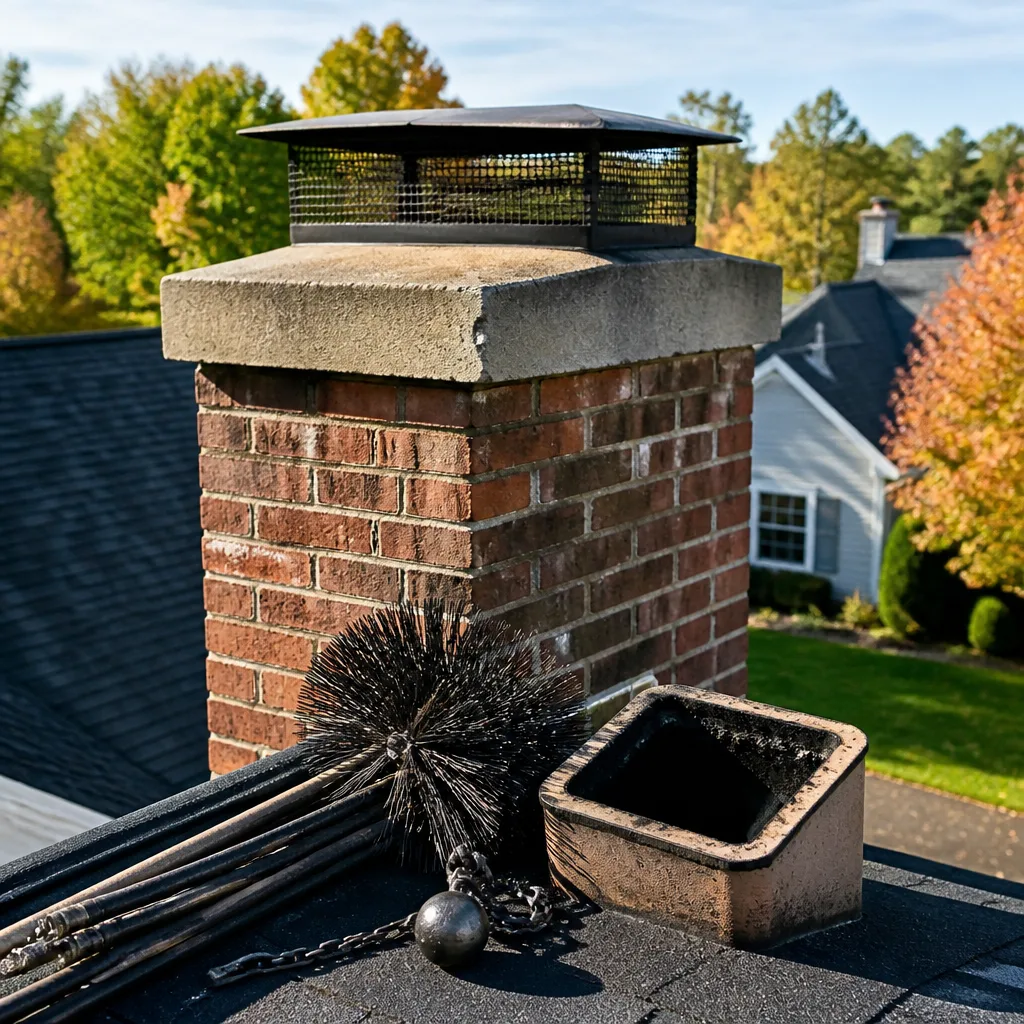 Sweep & inspection
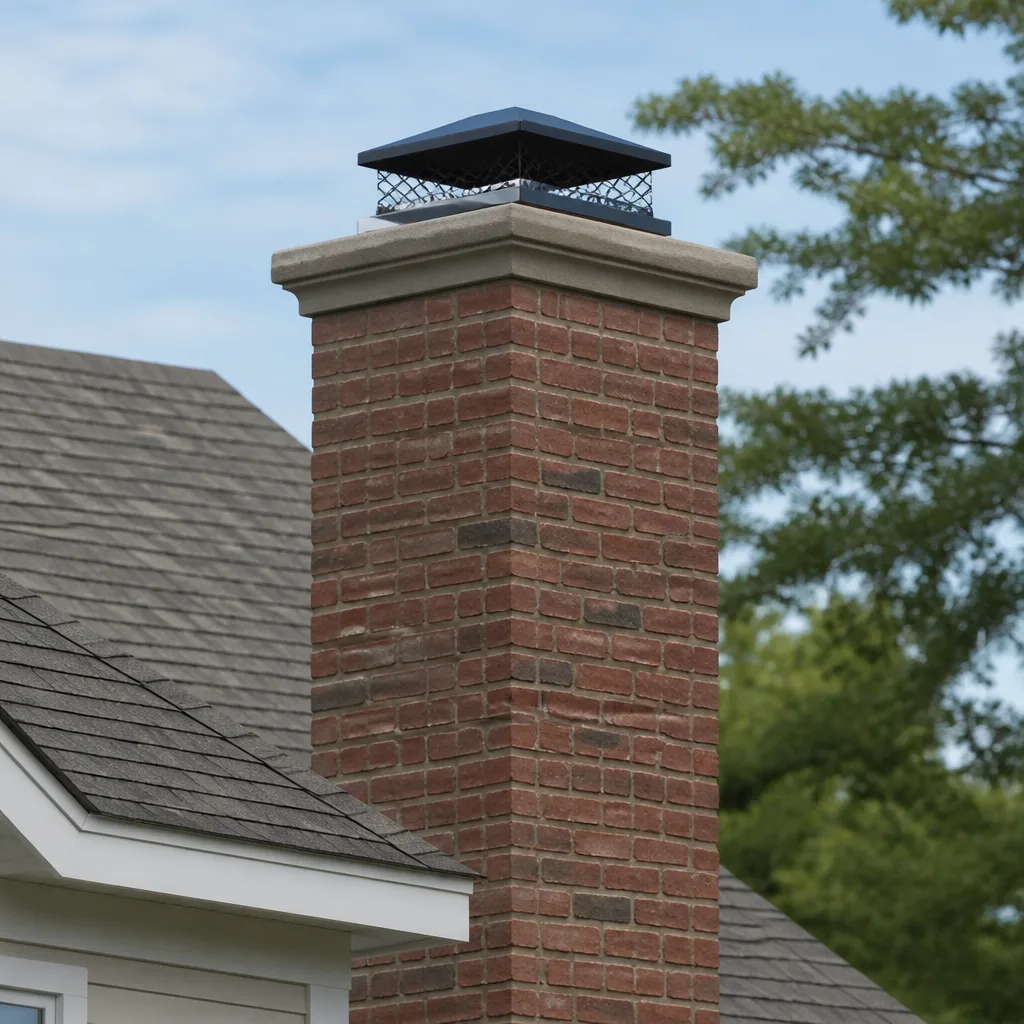 Caps & crowns
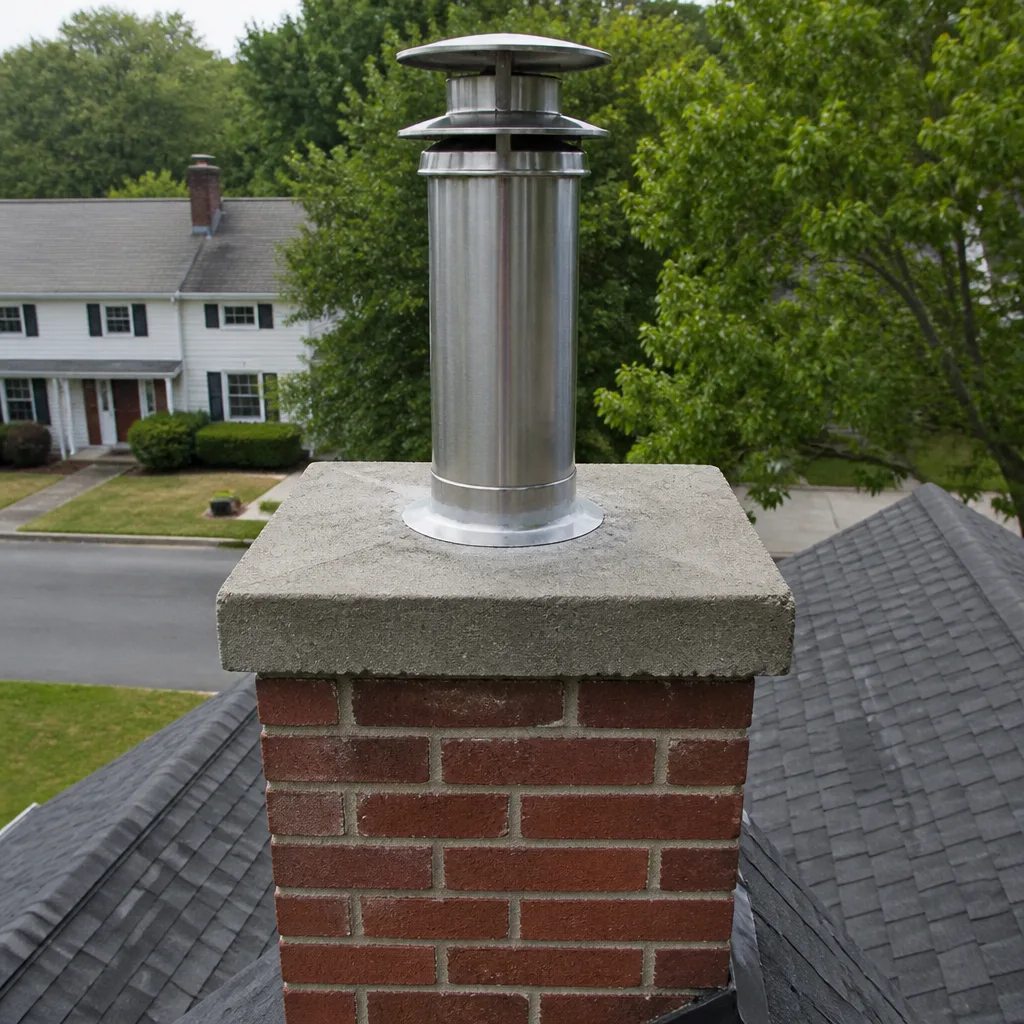 Flue relining
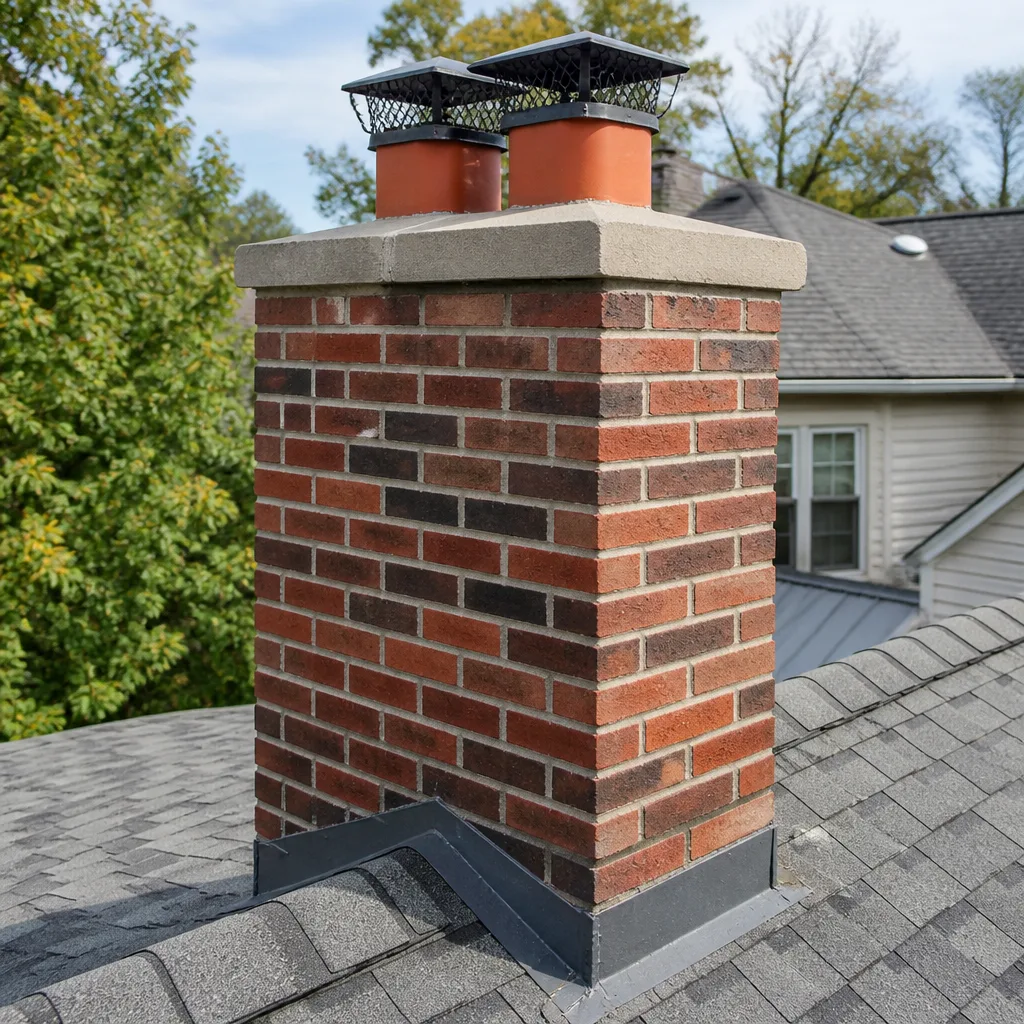 Masonry repair
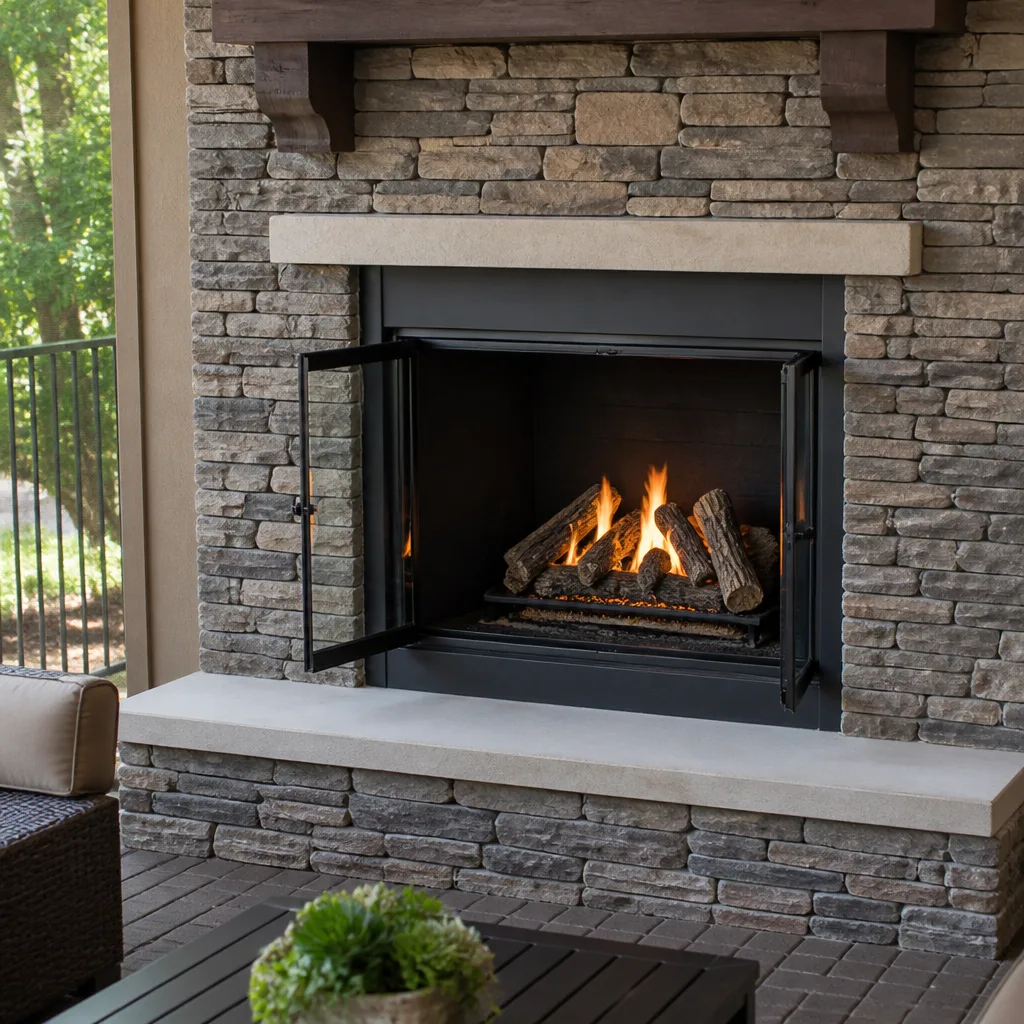 Gas fireplace service
Level 1 sweep and inspection to the NFPA 211 annual standard - flue, crown, cap, and flashing checked and photographed
Chimney sweep logs do not sweep chimneys. They loosen some creosote - which then falls where a brush and vacuum still have to collect it.
Seasonal Chimney Cleaning Care for South Bend: Year-Round Homeowner’s Guide
Most homeowners in South Bend treat chimney care as one chore in one season. They call a sweep in October, get the flue cleaned, and don’t think about the stack again until the following fall. That single visit misses three quarters of what actually determines whether a chimney lasts – the freeze-thaw cycling that cracks masonry every winter, the moisture that creeps in during spring rains, the swifts and squirrels that move in over summer, and the small repairs that could have been done in July but now force their way into a crowded October schedule. By the time the first cold snap hits South Bend, every sweep in town is booked out for weeks, and you’re negotiating with your own fireplace instead of planning ahead. This guide walks through the real four-season calendar for chimney care in South Bend, what to check in each season, and when a small problem needs a professional before it becomes a structural one.
Quick Answer
Chimney care in South Bend is a four-season cycle, not a once-a-year event: schedule sweeping and inspection in late summer before the fall rush, watch for freeze-thaw damage and draft changes through winter, inspect the crown and flashing for spring moisture problems, and check for nesting birds and cap damage in summer. The single most important habit is booking your pre-season sweep and inspection by late July or early August, when a technician can still fit you in and any repair has time to be completed before the first fire.
Styles & brands we work with
- Sweep & inspection
- Caps & crowns
- Flue relining
- Masonry repair
- Gas fireplace service
Table of Contents
- Why chimney care in South Bend is seasonal, not annual
- Fall: what pre-season ready actually means
- Winter: mid-season warning signs to watch for
- Spring: post-heating inspection priorities after a South Bend winter
- Summer: nesting birds, caps, and moisture protection
- How to build a maintenance calendar that fits South Bend’s climate
- What a real inspection report should include
- When cleaning isn’t enough: repair signals that mean structural work
Why chimney care in South Bend is seasonal, not annual
South Bend sits in a climate band where the heating season runs long and the freeze-thaw cycle repeats dozens of times through every winter. That cycle is what makes chimney maintenance here different from a mild-winter city on the West Coast or a hot-dry climate in the Southwest. Every time the temperature drops below freezing and climbs back above it, water that has soaked into masonry expands and contracts. Brick, mortar, and the crown on top of the chimney all take that stress. So does the clay tile liner, which ages faster when it’s repeatedly wet and then frozen.
That’s the reason chimney care here breaks into four distinct seasons with different jobs in each:
- Fall is about readiness – a cleaning, a confirmed inspection, and any repairs completed before the first fire.
- Winter is about observation – watching for changes in draft, odor, or visible cracking while the fire is in regular use.
- Spring is about moisture – catching crown cracks, flashing separation, and efflorescence before the summer rains settle in.
- Summer is about biology and prevention – capping the chimney, checking for nesting birds, and getting repairs done while the schedule is open.
A homeowner who treats all four seasons as part of one cycle protects the chimney as a structural component, not just a pipe that carries smoke. In our experience, the chimneys that hold up in South Bend are the ones where someone looked at the masonry in spring, not just the flue in fall. The ones that need expensive chimney repair are often the ones where a hairline crack in the crown went three winters without anyone noticing.
Fall: what pre-season ready actually means
Pre-season ready is not the same as swept. A cleaning removes creosote from the flue, but it doesn’t tell you whether the liner is sound, whether the crown has a crack, whether the damper seals, or whether the firebox has begun to spall. The complete version of pre-season ready in South Bend is a sweep plus a full inspection report with any recommended repairs completed before you light the first fire of the season.
Here’s what a genuine pre-season checklist covers:
- A full flue sweep to remove soot and creosote buildup from the previous heating season, including the smoke chamber and shelf where deposits collect.
- A camera-based inspection of the liner from firebox to cap, looking for cracks, gaps at joints, and deterioration at the top where the flue is most exposed.
- An exterior check of the crown, flashing, and mortar joints, since those are the entry points for water that causes most of the long-term damage.
- A cap and screen check so that birds and rain can’t get in over the winter, and so that the cap isn’t clogged with debris from the summer.
- A damper and firebox assessment to confirm the damper seals and the firebox brick and mortar are intact.
- Any repairs completed – not just quoted – before the first fire. A recommendation that waits until spring usually means a winter of use on a compromised flue.
The timing matters as much as the checklist. By October, the calendar fills up. The best window to book a pre-season sweep in South Bend is late July through August, when a technician can spend real time on the inspection and any repair can still be scheduled before the weather turns. Booking early also gives you options if something needs work. Booking in the last week of September usually means a quick clean and a follow-up appointment that lands somewhere in November.
If you haven’t had the chimney looked at in more than a year, this is the season to schedule a proper chimney sweep with an inspection attached, rather than a cleaning alone.
Winter: mid-season warning signs to watch for
Once the fire is running most evenings in South Bend, the chimney is being tested in ways that a fall inspection can’t fully predict. Mid-season is about noticing changes and knowing which ones mean stop using the fireplace.
Watch for these signals:
- Draft problems. Smoke that used to go up now rolls into the room, or the fire is harder to start and burns lazy. A draft change can point to a partially blocked flue, a failed damper, or a change in the cap or top of the stack.
- Odor shifts. A sharp, acrid smell when the fire is running, or a strong creosote smell on mild days when no fire is lit, can mean deposits have built up enough to need attention, or that moisture is getting into the flue and reacting with the creosote.
- Visible spalling. Flakes of brick or mortar appearing on the hearth or in the firebox mean the masonry is breaking down. That’s a stop-and-inspect sign, not something to sweep up and forget.
- Smoke stains around the firebox or on the chimney exterior. These suggest a leak path that’s letting smoke or gas escape where it shouldn’t.
- Creosote buildup visible on the flue walls if you can see into the firebox with a light. Glazed, shiny creosote is the highest-risk form and should prompt a call, not another fire.
When any of those appear, stop using the fireplace until a technician has looked at it. This is where the safety stakes are real. A cracked liner or heavy glazed creosote buildup is a chimney fire risk, and a blocked or damaged flue can push carbon monoxide back into the home instead of up the stack. Neither is a situation to manage by opening a window. Call a trained professional. A winter call also isn’t wasted. We answer 24/7, and a call outside dispatch hours is booked into the next opening, Sunday through Friday, 7am to 7pm.
Spring: post-heating inspection priorities after a South Bend winter
Spring is the season most homeowners skip, and it’s the one that matters most for the long-term health of a South Bend chimney. The freeze-thaw cycle that runs from November through March leaves its fingerprints on the top of the stack, the crown, and the flashing, and those are the places moisture gets in and starts the slow work of breaking down a chimney from the outside inward.
Spring inspection priorities specific to this climate:
- The crown. The concrete cap on top of the chimney is the most weather-exposed surface on the whole assembly. Look for hairline cracks, chipping at the edges, or a crown that’s pulling away from the flue. A cracked crown lets water into the masonry, which is the leading cause of chimney deterioration in freeze-thaw climates.
- Flashing. The metal or membrane seal where the chimney meets the roof takes the brunt of ice damming and snow load. Lifted, separated, or rusted flashing shows up in spring as a leak path even before you see interior water stains.
- Efflorescence. That white, powdery staining on the outside of the brick is more than cosmetic. It’s a moisture signal – salts drawn out of the masonry as water moves through and evaporates. Efflorescence in spring tells you water is getting in somewhere above.
- Mortar joints. Look for joints that have receded or gone crumbly. Repointing in spring, before the summer heat, keeps the joints from eroding further next winter.
- The firebox and smoke chamber. A winter of fires leaves deposits and heat stress. This is when small cracks are easiest to catch and cheapest to address.
Spring is also when it’s easier to schedule repair work, since most homeowners are focused on the HVAC system and the gutters, not the chimney. That quiet season works in your favor if the inspection turns up something. A crown repair or flashing reset done in May is one less item to compete for on a fall calendar.
Summer: nesting birds, caps, and moisture protection
Summer is when the chimney sits unused and invites company. In Indiana, chimney swifts return to nest in late spring and raise their young through summer, and they’re federally protected under the Migratory Bird Treaty Act. That means once they’ve nested in your flue, they cannot legally be removed until the young have fledged – the birds have to be allowed to finish, and any attempt to clear them out mid-season is both illegal and generally ineffective. Chickens can’t be removed from the flue during the nesting window.
That legal reality is why chimney caps matter in summer, not just fall. A properly fitted cap with a screen is the one thing that keeps swifts, squirrels, and starlings from moving in while the chimney is idle. Once a bird is already inside, the work changes from prevention to monitoring and cleanup: wait out the nesting period, then have the flue cleared and inspected once the birds are gone, since nests, droppings, and debris left in the flue become their own fire and blockage risk the following season.
Summer is also the best season to do the work that’s easiest to postpone and hardest to schedule later:
- Cap installation or replacement. Copperfield and Olympia Chimney caps and covers are built for long-term weather resistance, and a proper cap is the single best defense against birds, rain, and downdraft.
- Crown and masonry repair. Warm, dry weather gives sealers and repair materials the conditions they need to cure properly.
- Liner work if the inspection called for it. A relaxed schedule means a technician can handle a full reline without rush.
- Siding and flashing checks that are easier to see and reach when there’s no ice or snow load.
Any chimney work done in summer should be finished by the end of August, so that the fall pre-season visit is confirmation rather than discovery. If birds or squirrels have already been in the flue, that cleanup and inspection is part of the summer list, not a fall afterthought.
How to build a maintenance calendar that fits South Bend’s climate
A generic national chimney calendar – clean once a year, maybe inspect every few – isn’t built for South Bend’s freeze-thaw winters. Here’s a calendar that is:
- Late July. Book your pre-season sweep and inspection. This is the earliest point at which the previous heating season’s deposits are fully settled in the flue and you still have room on the schedule.
- August. Complete the sweep, the camera inspection, and any recommended repairs. Confirm the crown, flashing, and cap are ready. Get the inspection report in hand, not just a verbal summary.
- September. Start the first light fires of the season slowly, to check draft and to confirm the damper and flue are behaving as expected. Note any smoke rollback or odd smells for the technician.
- December through February. Watch for winter warning signs. If draft drops, odor shifts, or spalling appears, stop using the fireplace and call. Don’t push through a problem to get to the next season.
- March through April. Do the spring exterior and interior inspection. Catch crown cracks, flashing lift, and efflorescence before the rains.
- May through June. Complete spring repairs, install or replace the cap, and check for nesting activity before the summer swifts settle in.
- July. Start the cycle again with your pre-season booking.
The one habit that makes the whole calendar work is booking ahead. In South Bend, that means scheduling by late July or early August. The goal is not to be the customer who calls on the first cold night. It’s to be the one whose sweep reports a clean liner, a sound crown, and a capped chimney, and can start a fire the same evening without a second thought.
What a real inspection report should include
An inspection that amounts to a technician looking up the flue with a flashlight isn’t a real inspection. A proper report is a document you can hold, keep, and hand to a future buyer or insurer. It should be based on camera imagery of the liner, an exterior review, and written findings in each of these areas:
- Flue liner condition – a camera-based assessment from the firebox to the top, with any cracks, joint gaps, or missing tile noted.
- Smoke chamber and firebox – condition of the masonry, any spalling, and whether the damper seals properly.
- Crown and top of the stack – crown condition, cracks, and the condition of any cap or cover.
- Flashing and roof transition – whether the seal between chimney and roof is intact.
- Exterior masonry – joint condition, efflorescence, and any signs of moisture intrusion.
- Clearances and overall safety – the code and safety findings that determine whether the chimney is safe to use.
The report should also tell you plainly which findings are urgent and which are not. In our experience, the most common complaint about chimney work is that a homeowner is told they need thousands of dollars in liner or masonry work they have no way to verify. The answer to that concern is evidence – a camera view a homeowner can see, and photo documentation of the findings. A real inspection shows you what was seen, not just what was concluded.
When cleaning isn’t enough: repair signals that mean structural work
Sweeping and inspecting are the core of the seasonal cycle, but some findings are repair jobs, not maintenance ones. Cleaning a chimney that needs a repair is not solving the actual problem. The most common repair signals we see in South Bend homes fall into three groups:
- Liner damage. A cracked or deteriorated liner means the flue is no longer safely containing smoke and gases. This is typically handled with a DuraFlex flexible liner system, which is a professional-grade relining solution and something we install and work with directly. A full reline is not a job to postpone.
- Flue deterioration that’s not yet a full replacement. Here HeatShield ceramic resurfacing is the option worth knowing about. It’s a resurfacing system that can restore a deteriorating flue and extend the liner’s life without a full replacement, and our technicians are certified to apply it. Not every chimney needs a full liner; without HeatShield capability, too many are told they do.
- Component and structural failures. Missing or damaged caps, cracked crowns, failed flashing, and deteriorated masonry all fall into chimney repair, and they’re the jobs that benefit most from trade-level sourcing. We work with Gelco, Famco, Olympia Chimney, and Copperfield caps, covers, and structural components because they’re built for long-term weather resistance, not the hardware-store substitutes that fail after a few seasons.
The same specialist who inspects is the one who repairs, so the findings don’t need to be re-explained to a second trade. Chimney Sweep South Bend offers sweep, inspection, and repair as three core services, which means the work gets evaluated and handled in one cycle rather than handed off.
Common Mistakes to Avoid
- Waiting until October to book. By the time the first cold snap hits South Bend, the fall calendar is full and you’re left choosing between a rushed cleaning and no cleaning. Book in late July or August instead.
- Treating cleaning and inspection as the same thing. A sweep removes creosote; it doesn’t tell you whether the liner is cracked or the crown is failing. Ask for the inspection report.
- Skipping the spring check. The freeze-thaw cycle from winter leaves crown cracks, flashing lift, and efflorescence that only show up in spring. Skipping that season is how small moisture damage becomes masonry replacement.
- Ignoring the crown, flashing, and cap while focusing on the flue. Most chimney deterioration in South Bend starts at the top, not in the firebox. The exterior is where the water gets in.
- Running an uncapped flue through summer. Chimney swifts and other birds will nest in an uncapped flue, and Indiana’s nesting protections mean you can’t simply clear them out mid-season. Cap the chimney before summer.
- Doing heavy liner or structural repairs as a fall emergency. Liner and structural work are best handled in summer when the calendar has room and materials can be sourced without rushing.
- Accepting a quote with no camera evidence. If a technician tells you the liner is shot, ask to see it. You shouldn’t be asked to approve major liner or masonry work without photo or camera documentation of the problem.
See the difference
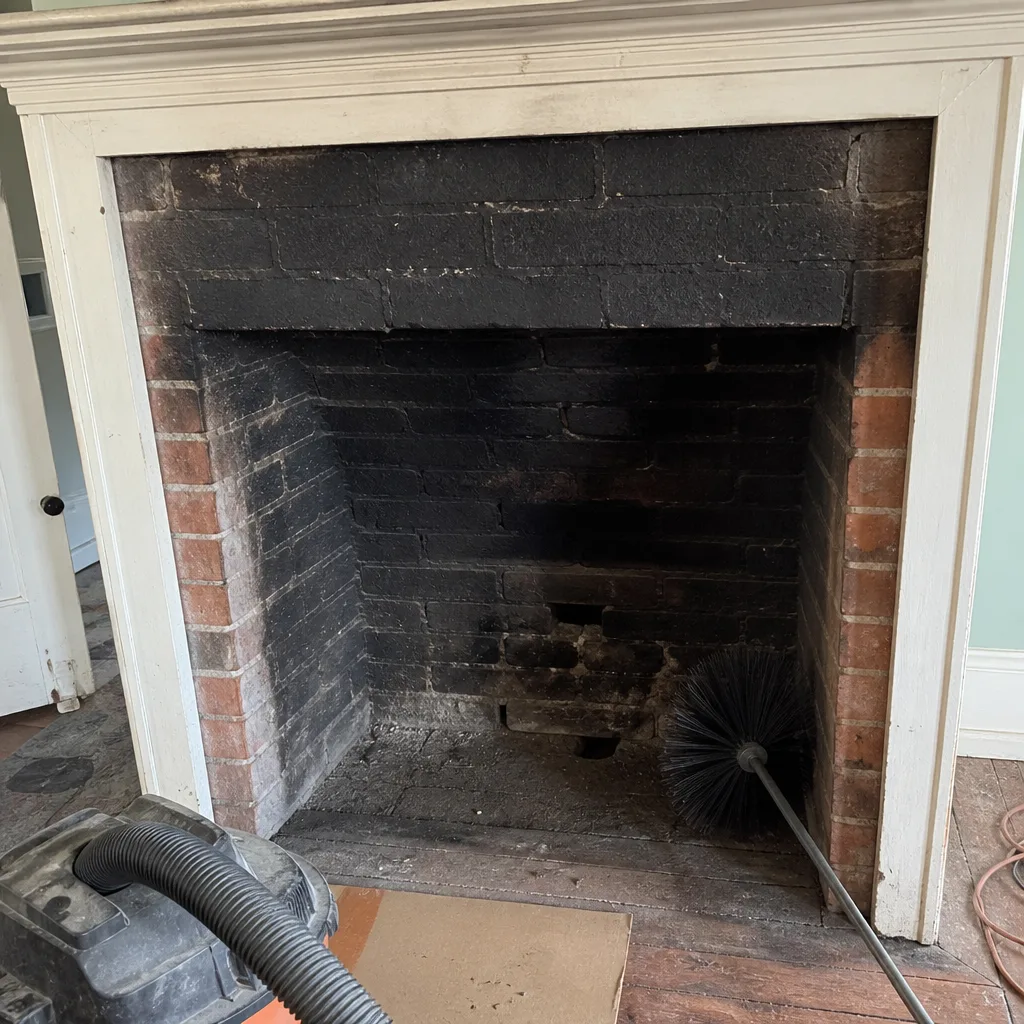 Before
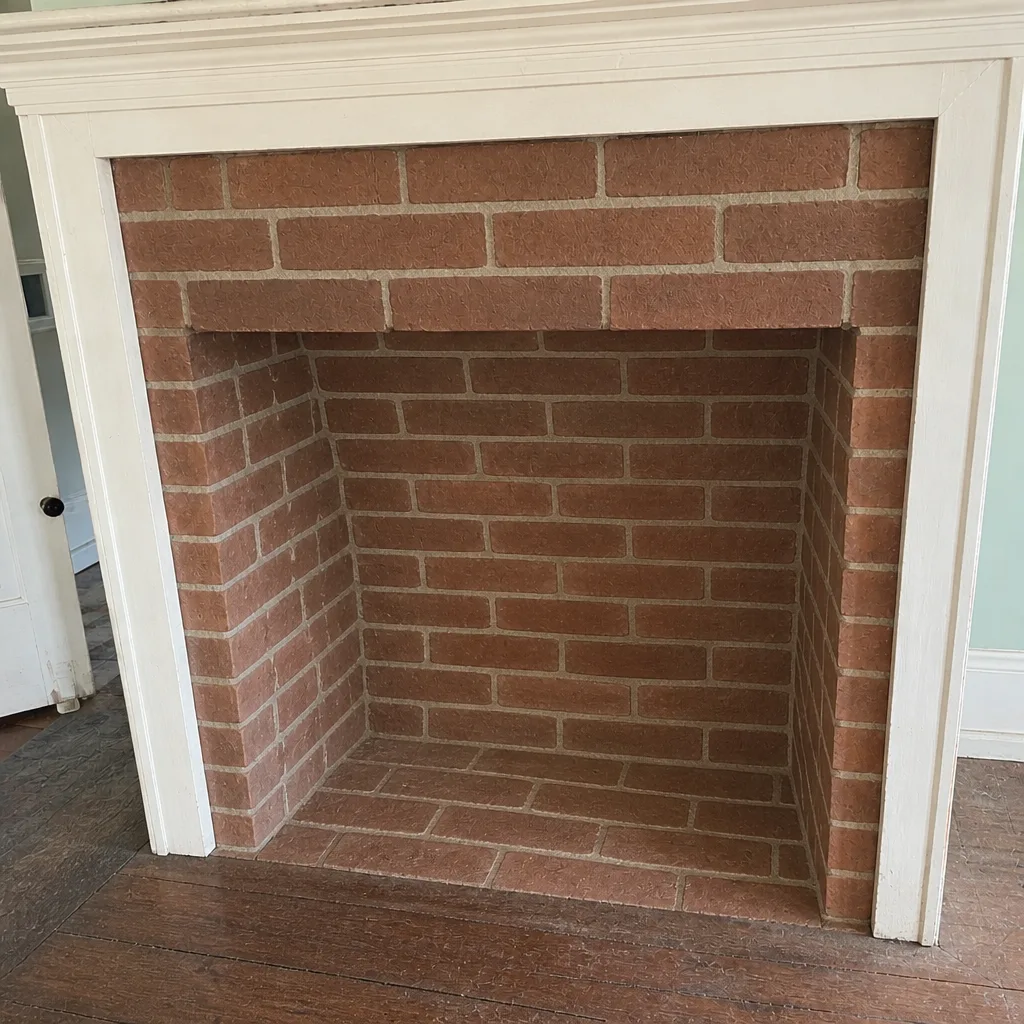 After
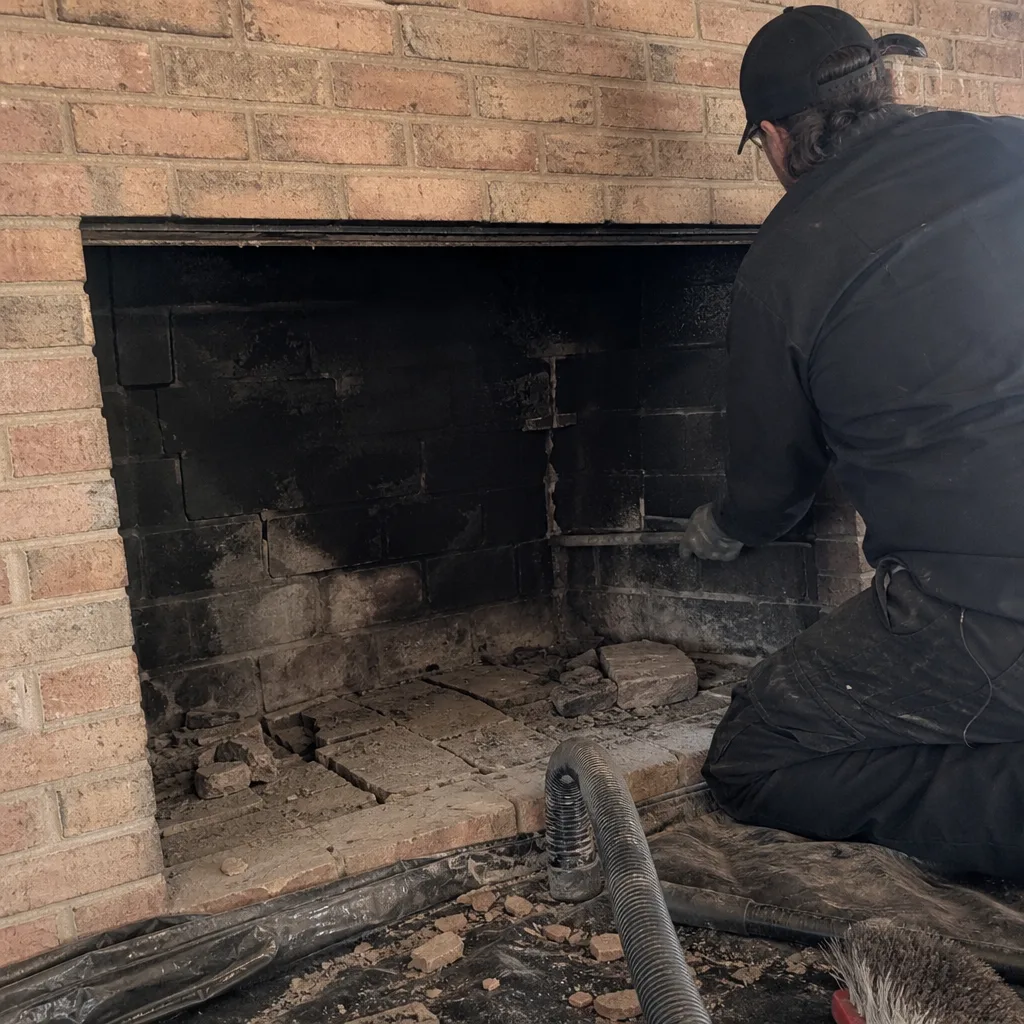 Before
 After
 Before
 After
When to Call a Professional
Call a professional when the fireplace is behaving differently – draft that has dropped, smoke that rolls back into the room, an acrid smell that wasn’t there before, or visible spalling on the firebox. Call when you haven’t had the flue inspected in more than a year, when the exterior masonry shows cracking or efflorescence, or when a cap is missing or damaged. Call when birds or squirrels have been in the flue and need a clearance and inspection once the nest is empty. And call if you’re buying a South Bend home and need the chimney assessed before closing. Chimney Sweep South Bend offers free estimates in South Bend – call (888) 334-4231. We answer 24/7, with fast dispatch from 7am to 7pm, Sunday through Friday. If you’re building the seasonal calendar for a home in the area, this is also the moment to read up on what South Bend homeowners should expect from a proper sweep, inspection, and repair cycle.
Frequently Asked Questions
Once a year for both sweeping and inspection if the fireplace gets regular use through the heating season, and a second inspection look in spring after a hard winter. The annual checklist is one sweep, one camera-based inspection, and a look at the crown, flashing, and cap. Chimneys that burn heavily or use green wood may need more frequent attention. If it’s been more than a year, book a sweep and inspection, and call (888) 334-4231 for a free estimate.
Late July through August is the best window. The previous season’s deposits are settled, the schedule still has room, and any repair found during inspection can be completed before the first fire of fall. October is the worst month to try to book, because the whole city is calling at once. If you’ve missed the summer window, schedule a first available appointment and start the repair conversation early. Call (888) 334-4231 for a free estimate.
You can, but you shouldn’t wait long. A cracked crown lets water into the masonry, and in South Bend’s freeze-thaw climate that water expands every time it freezes, which makes the crack worse. It’s a spring or summer repair, not a winter emergency, but it’s also not something to leave for a season. Get it inspected and scheduled before the next freeze. Call (888) 334-4231 for an estimate.
Not if they’re chimney swifts with an active nest. In Indiana, chimney swifts are federally protected, and the nest cannot legally be removed until the young have fledged. The right approach is to wait out the nesting period, then have the flue cleared and inspected once the birds are gone. After that, install a proper cap to keep them from returning next summer. Call (888) 334-4231 to schedule the post-nesting cleanup and cap.
Ask to see the camera footage of the flue. A cracked liner is a genuine safety issue because it lets heat and gases reach combustible parts of the chimney structure, but you should never be asked to approve a liner replacement based on a verbal description alone. A real inspection shows the damage on camera, and that’s the standard we hold ourselves to. Call (888) 334-4231 for an inspection with documented findings and a free estimate.
Usually nothing dramatic in one year, but the risk compounds. Creosote builds, the crown takes another freeze-thaw cycle, and a small flashing leak has time to soak the masonry. The real cost of skipped maintenance in South Bend is the repair bill that shows up two or three seasons later. If you’ve skipped a year, get back on the calendar with a sweep and inspection. Call (888) 334-4231 for a free estimate.
The Bottom Line
Chimney care in South Bend works best as a four-season cycle, not a single October cleaning. Schedule sweeping and inspection in late summer so repairs can be finished before the first fire. Watch for draft changes, odor shifts, and spalling through winter, and stop using the fireplace when any of those appear. Do the spring check for crown cracks, flashing separation, and efflorescence – the moisture signals that drive most long-term damage. Cap the chimney before summer, since nesting swifts and other birds can’t legally be removed mid-season. And when a repair is needed, ask for the camera evidence behind it. Chimney Sweep South Bend handles sweep, inspection, and repair in one cycle, with professional-grade materials including DuraFlex, HeatShield, Copperfield, and Olympia Chimney. Call (888) 334-4231 for a free estimate.
Written by the team at Chimney Sweep South Bend.